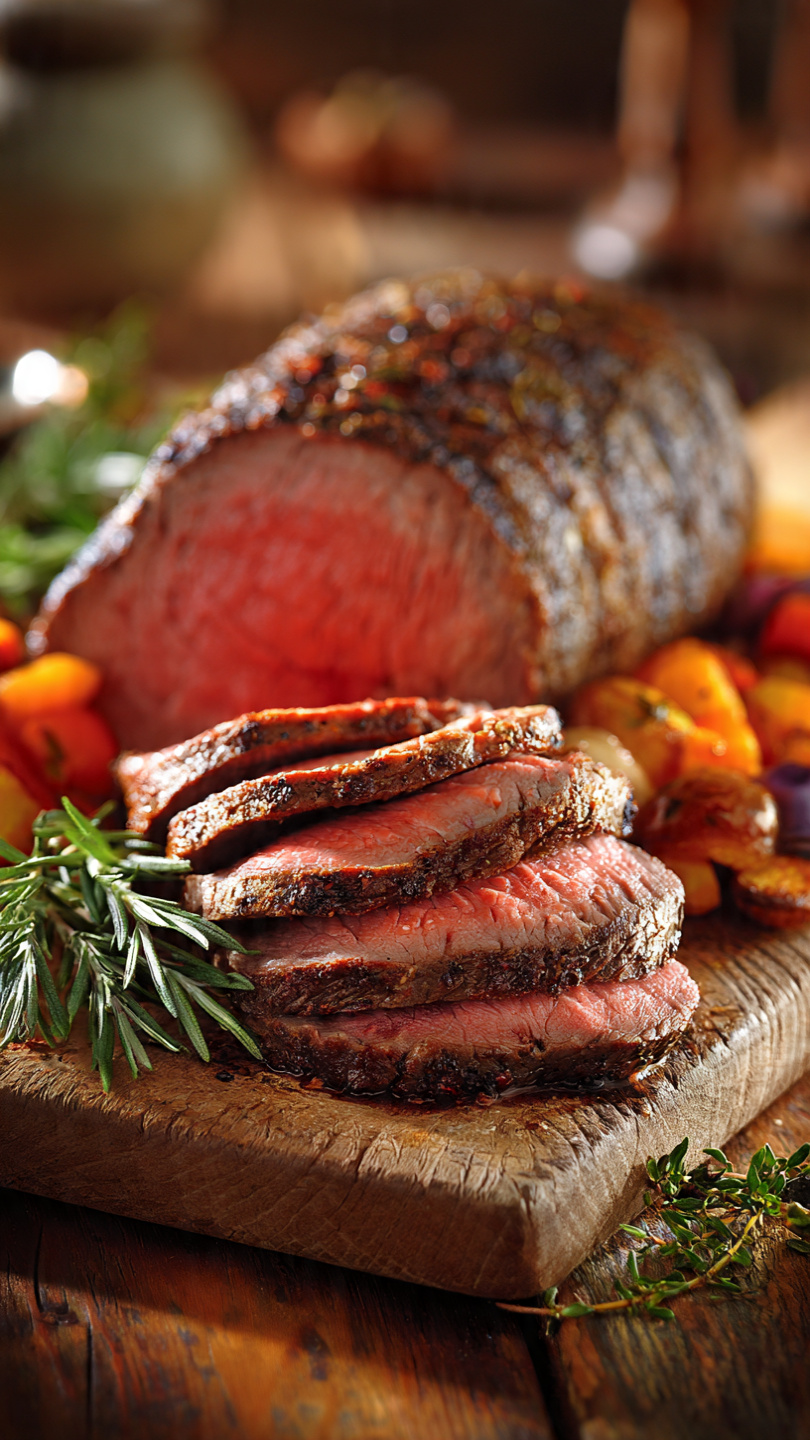
Perfect Roast Beef Recipe
Learn how to cook the perfect roast beef with a golden crust, juicy pink center, and deep savory flavor. This foolproof method delivers tender, restaurant-quality results every single time.

The Only Roast Beef Recipe You Will Ever Need
There is something undeniably special about a perfectly cooked roast beef. The moment it comes out of the oven with its deeply bronzed, herb-crusted exterior and blush-pink, juicy interior, the whole kitchen smells like a Sunday that never has to end. This is the recipe that teaches you how to roast beef perfectly, whether you are cooking for a quiet family dinner or a proper holiday spread.
The good news? It is far easier than it looks. A handful of pantry ingredients, one reliable technique, and a meat thermometer are all that stand between you and the best roast beef you have ever made at home.
Choosing the Best Meat for Roast Beef
This is where the journey really starts. The cut you choose will shape the texture, flavor, and cooking time of your roast more than any other single decision.
- Ribeye roast is the undisputed champion for flavor. Its generous marbling melts into the meat as it cooks, keeping everything luscious and tender.
- Top round roast is leaner and more economical, producing clean, classic deli-style slices when cooked correctly.
- Sirloin tip roast sits right in the middle, offering a good balance of tenderness and price.
For the most impressive results, look for a roast with visible marbling throughout the flesh, not just around the edges. That fat is your flavor.
Chef's Tip: Whatever cut you choose, bring your roast to room temperature for at least 45 minutes before it goes into the oven. Cold meat straight from the fridge will cook unevenly, giving you a grey, overcooked outer ring around a raw center.
How to Season Beef for Roasting
The best way to cook roast beef is to keep the seasoning bold but unfussy. Fresh herbs, garlic, good olive oil, and a generous hand with salt are all you need. We are building a flavored crust that seals in moisture and creates that gorgeous outer bark.
Patting the meat completely dry with paper towels before rubbing on your seasoning paste is one of those small steps that makes a genuinely big difference. Moisture on the surface creates steam, and steam is the enemy of a caramelized crust.
Using quality tools and fresh ingredients makes this recipe shine. A reliable instant-read thermometer takes all the guesswork out of hitting that perfect internal temperature, and a sturdy roasting rack allows hot air to circulate evenly around the entire joint.
The High-Heat Start Method: Why It Works
The technique at the heart of this recipe is a high-heat sear in the oven followed by a gentler finish. Here is what happens:
- 450 degrees F for 15 minutes creates a deep, caramelized crust through the Maillard reaction, locking in flavor.
- 325 degrees F for the remainder gently brings the interior up to the perfect temperature without overcooking the outer layers.
This two-stage method is the answer to the question of how to cook tender roast meat without drying it out. It gives you that steakhouse-quality contrast between a savory outer crust and a tender, pink center.
Temperature Guide for Perfect Results:
- Rare: 120-125 degrees F
- Medium-Rare: 130-135 degrees F (recommended)
- Medium: 140-145 degrees F
- Well Done: 160 degrees F and above
Do Not Skip the Rest
Resting the roast after it comes out of the oven is arguably the most important step of all. When meat cooks, its juices are pushed toward the center by heat. Resting for 15 to 20 minutes allows those juices to redistribute back through the entire roast. Skip this step and those same juices will pool on your cutting board instead of staying in the meat.
Tent the roast loosely with foil and use those 20 minutes to make a quick pan gravy with the drippings, set the table, and pour yourself something well-deserved.
Ready to make it? Here is the full step-by-step recipe:
Perfect Roast Beef Recipe
Learn how to cook the perfect roast beef with a golden crust, juicy pink center, and deep savory flavor. This foolproof method delivers tender, restaurant-quality results every single time.
Ingredients
- 3 lb beef top round or ribeye roast, tied with kitchen twine if needed, brought to room temperature
- 2 tbsp olive oil, extra virgin
- 4 garlic cloves, minced
- 2 tbsp fresh rosemary, finely chopped
- 1 tbsp fresh thyme, finely chopped
- 2 tsp kosher salt, or to taste
- 1 1/2 tsp black pepper, freshly cracked
- 1 tsp smoked paprika
- 1 tbsp Dijon mustard, optional, adds depth and helps crust adhere
- 1/2 cup beef broth, for the roasting pan
- 2 tbsp unsalted butter, for basting
Instruction
Remove the beef roast from the refrigerator at least 45 minutes to 1 hour before cooking. Bringing it to room temperature ensures even cooking throughout.
Preheat your oven to 450 degrees F (230 degrees C). Place a roasting rack inside a heavy roasting pan.
In a small bowl, combine the olive oil, minced garlic, rosemary, thyme, kosher salt, black pepper, and smoked paprika. If using Dijon mustard, stir it in now to form a thick paste.
Pat the beef completely dry with paper towels on all sides. Moisture is the enemy of a good crust.
Rub the herb and oil mixture all over the roast, pressing firmly so it adheres to every surface.
Place the roast fat-side up on the roasting rack. Pour the beef broth into the bottom of the pan to prevent drippings from burning.
Roast at 450 degrees F (230 degrees C) for 15 minutes to develop a deep, golden-brown crust.
Without opening the oven, reduce the temperature to 325 degrees F (165 degrees C). Continue roasting for approximately 60 to 75 minutes, or until a meat thermometer inserted into the thickest part reads 130 degrees F (54 degrees C) for medium-rare, or 140 degrees F (60 degrees C) for medium.
During the last 20 minutes, add the butter to the pan drippings and baste the roast once or twice for extra richness.
Remove the roast from the oven and tent it loosely with aluminum foil. Let it rest for at least 15 to 20 minutes before carving. This step is non-negotiable as it allows the juices to redistribute.
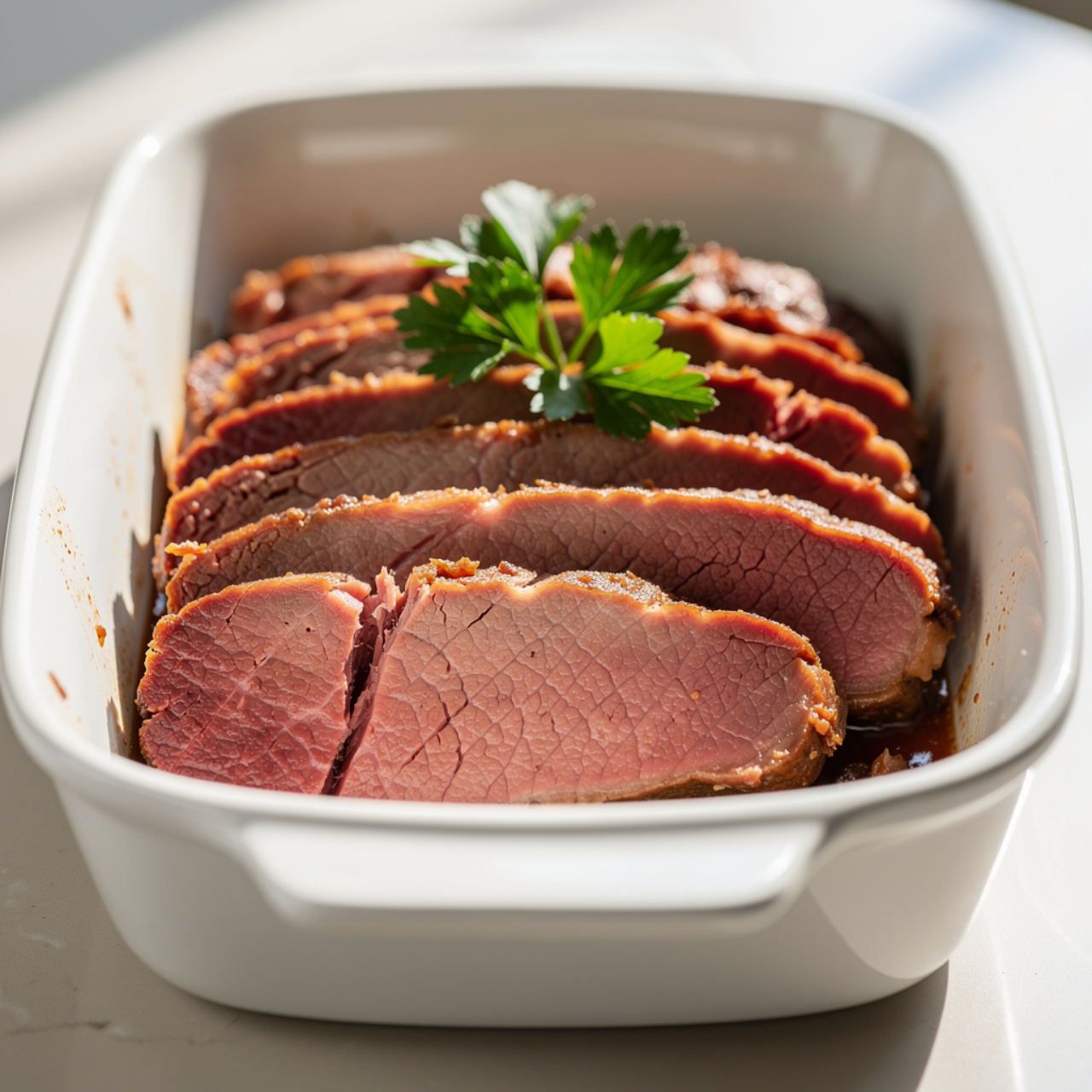
Slice against the grain into thin, even slices and serve immediately with pan drippings spooned over the top.
Equipment
- Heavy roasting pan
- Roasting rack
- Instant-read meat thermometer
- Aluminum foil
- Basting brush
- Carving knife and fork
- Small mixing bowl
- Paper towels
Notes
What to Have With Roast Beef
A roast this good deserves worthy companions on the plate. Here are some classic and creative pairings:
- Classic sides: Creamy mashed potatoes, roasted Yorkshire puddings, honey-glazed carrots, and green beans with almonds
- Sauces: Rich beef gravy made from pan drippings, classic horseradish cream, or a red wine jus
- For leftovers: Thinly sliced cold roast beef makes extraordinary sandwiches layered with horseradish mayo, caramelized onions, and sharp cheddar on crusty bread
This recipe also works beautifully roasted outdoors on a covered charcoal or gas grill using indirect heat, making it a stunning option for summer entertaining when you want to keep the heat outside.
However you serve it, this is the kind of meal that earns you compliments long after the plates are cleared.